
About
I like messy problems, half-formed ideas and the bit before the brief makes sense.
I started in industrial design, working alongside electrical, firmware and software engineers, which means I naturally think in systems instead of focusing on screens. I care about how things are built, not only how they look.
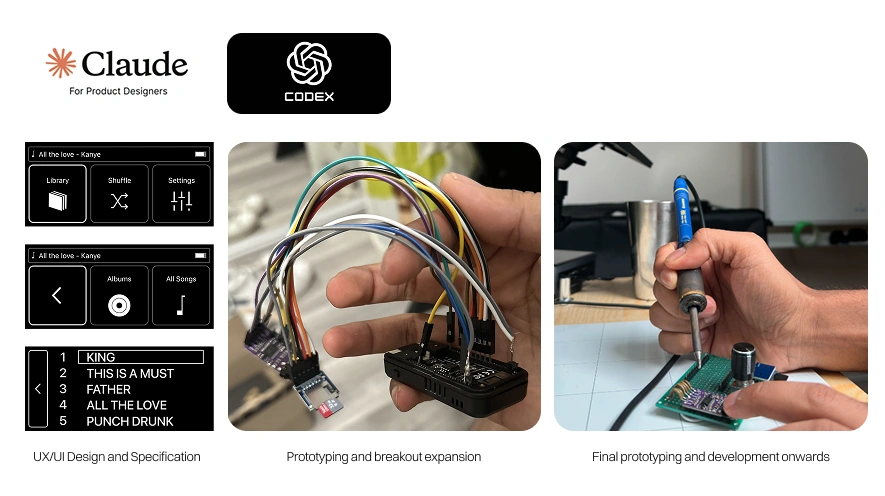
The line between designing and building is dissolving fast, and I think that's the most exciting shift in years. I've been leaning into it as I prototype on real hardware, ship native apps, and learn things I never thought I'd touch. More on that below.
Product Designer
I like messy problems, half-formed ideas and the bit before the brief makes sense.
I started in industrial design, working alongside electrical, firmware and software engineers, which means I naturally think in systems instead of focusing on screens. I care about how things are built, not only how they look.
The line between designing and building is dissolving fast, and I think that's the most exciting shift in years. I've been leaning into it as I prototype on real hardware, ship native apps, and learn things I never thought I'd touch. More on that below.